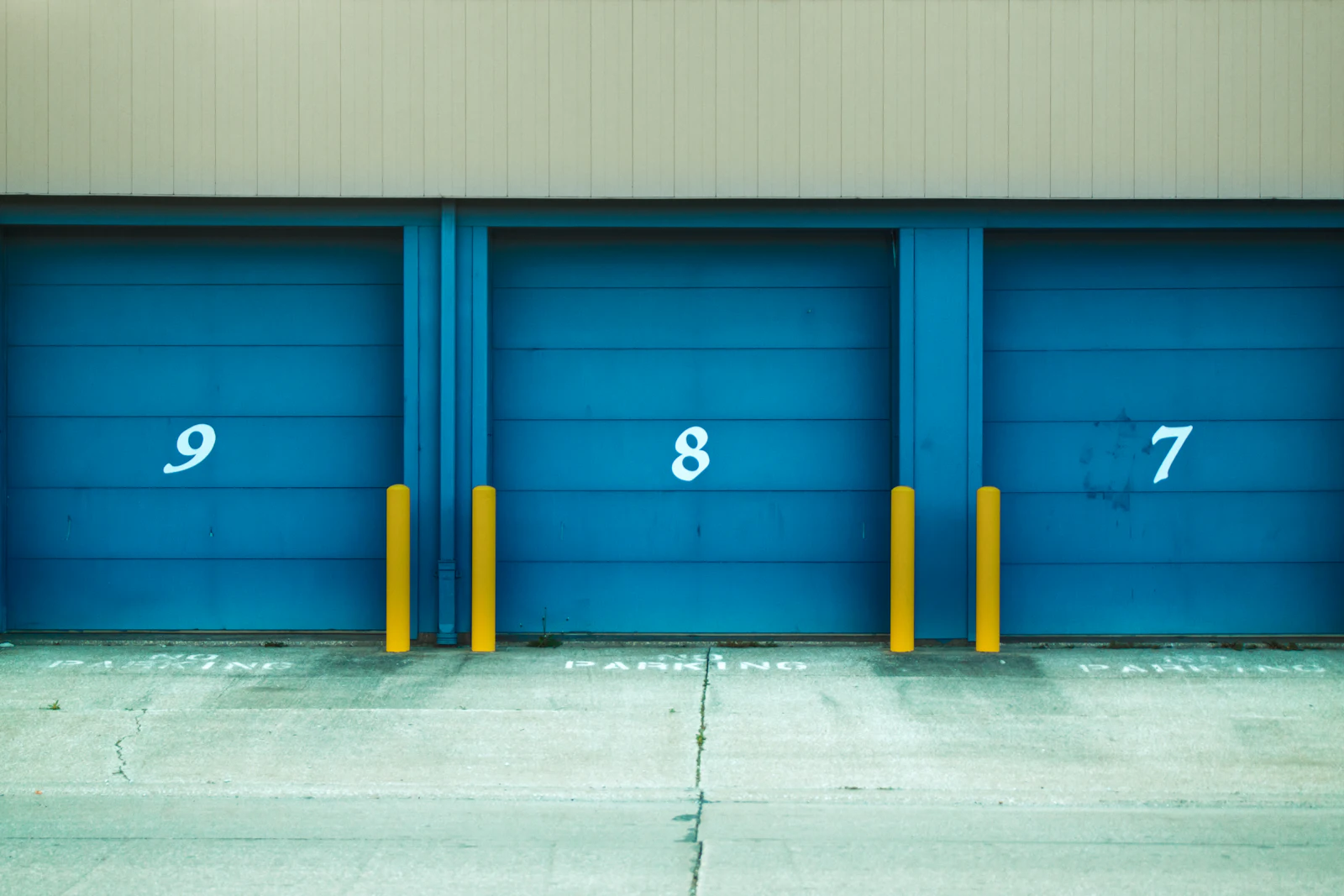
Common storage unit sizes
US facilities usually describe units by their floor dimensions in feet. UK facilities often quote square feet, and European facilities square metres. Exact sizes vary between providers, so treat this as a rough guide:
| US size (ft) | Area | Approx. metric | Typically fits |
|---|---|---|---|
| 5 × 5 | 25 sq ft | about 2–2.5 m² | Boxes, a small chest of drawers, seasonal items, a bike. Like a large closet. |
| 5 × 10 | 50 sq ft | about 4.5–5 m² | Contents of a studio flat or a small bedroom: a mattress, a sofa, boxes. |
| 10 × 10 | 100 sq ft | about 9–10 m² | A one-bedroom apartment or flat, or a two-bedroom home packed tightly. |
| 10 × 15 | 150 sq ft | about 14 m² | A two-bedroom home with appliances. |
| 10 × 20 | 200 sq ft | about 18–19 m² | A three-bedroom house, or a car with room to spare. |
| 10 × 30 | 300 sq ft | about 28 m² | A four- or five-bedroom house, or business stock and equipment. |
Most units are around 8 ft (about 2.4 m) high, so stacking safely uses the full height and can let you choose a smaller floor area.
How to work out your size
- List the large items first: beds, sofas, wardrobes, white goods, bikes.
- Count or estimate your boxes. Standard-sized boxes stack better and waste less space.
- Decide whether you need a walkway to reach things during your rental.
- Ask the facility to show you two sizes. Many have a size estimator or will advise you in person.
Tips to fit more into a smaller unit
- Dismantle bed frames and tables and keep the fixings in labelled bags
- Stand sofas on end only if the manufacturer says it’s safe
- Use the space inside wardrobes, drawers and appliances for small items
- Put heavy boxes at the bottom and lighter ones on top
- Use free-standing shelving to stack boxes higher without crushing them
More ideas in our guide to packing a storage unit.
Should you size up or down?
If you’ll only visit once or twice, pack tightly and choose the smaller size. If you’ll be in and out often (for business stock, for example), a little extra space for a walkway saves time and frustration. Some facilities let you move to a different size during your rental if your needs change, so it’s worth asking.
Last updated: 13 October 2026


